AGRICULTURAL WINDOW TINTING
Heat and glare control for tractors, harvesters and farm machinery cabs across the Waikato.
TRACTORS · HARVESTERS · FARM MACHINERY




NO MORE FARM OPERATOR FATIGUE
Cooler Cabs For Long Days In The Paddock
Agricultural window tinting for farm machinery by Mats Detailing, Hamilton.
Tractor and harvester cabs are mostly glass, and during silage, hay and harvest seasons operators can spend twelve hours or more inside them. With the sun beating through every side, cabs heat up fast, air-con struggles, and constant glare off paddocks, dust and windscreens leads to operator fatigue by the end of the day.
Our agricultural window tinting uses heat-rejecting carbon and ceramic films that cut the sun's heat and glare while keeping a clear view of the paddock, implements and mirrors. Non-metallic films won't interfere with GPS guidance, auto-steer, yield monitors or two-way radios, which matters in modern precision farming. Films also block harmful UV, protecting operators' skin and the cab's seats and dash.
We tint tractors, combine harvesters, forage harvesters, loaders, sprayers, diggers, earthmoving machinery and utility vehicles for dairy farms, contractors and lifestyle blocks across Hamilton, Morrinsville, Matamata, Cambridge, Te Awamutu and the wider Waikato. On-farm installs can be arranged for larger machinery. Machinery dusty after a season? Ask about our ute and 4x4 detailing.
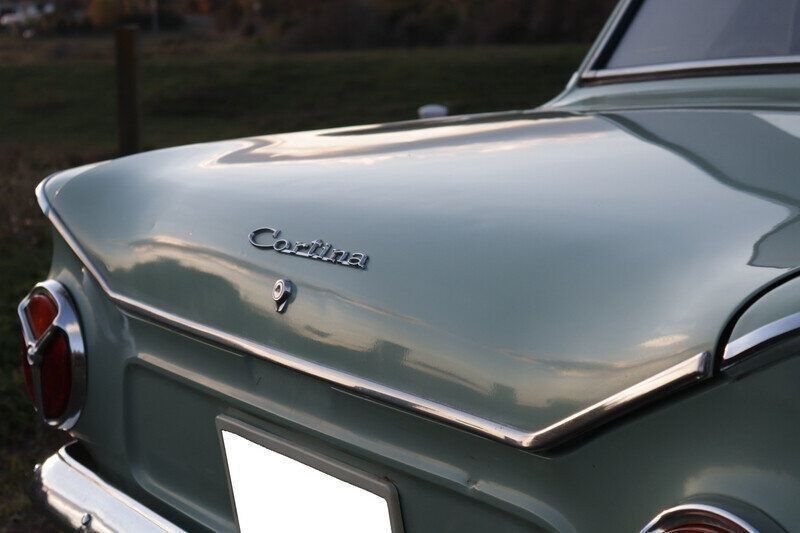
Cooler Cabs
Less heat through large cab glass, so air-con keeps up.
Less Glare
Reduced eye strain over long days in the paddock.
GPS-Friendly Films
Non-metallic tint that won't block guidance or radios.
THE BENEFITS
What Tint Does For Your Operators
Comfortable operators are safer, sharper and more productive through the busiest seasons.
01
Less Fatigue
Cooler, glare-free cabs help operators stay alert on long shifts.
02
Clearer View
Reduced glare off paddocks, water and dust makes it easier to watch implements.
03
UV Protection
Protects operators' skin and stops seats and dashboards cracking.
04
Lower Running Costs
Air-con works less hard, easing load on cab cooling systems.
AGRICULTURAL TINT PACKAGES
Choose Your Cab Tint
Three film types to suit any cab. Every machine is quoted on its cab size and the number of glass panels.
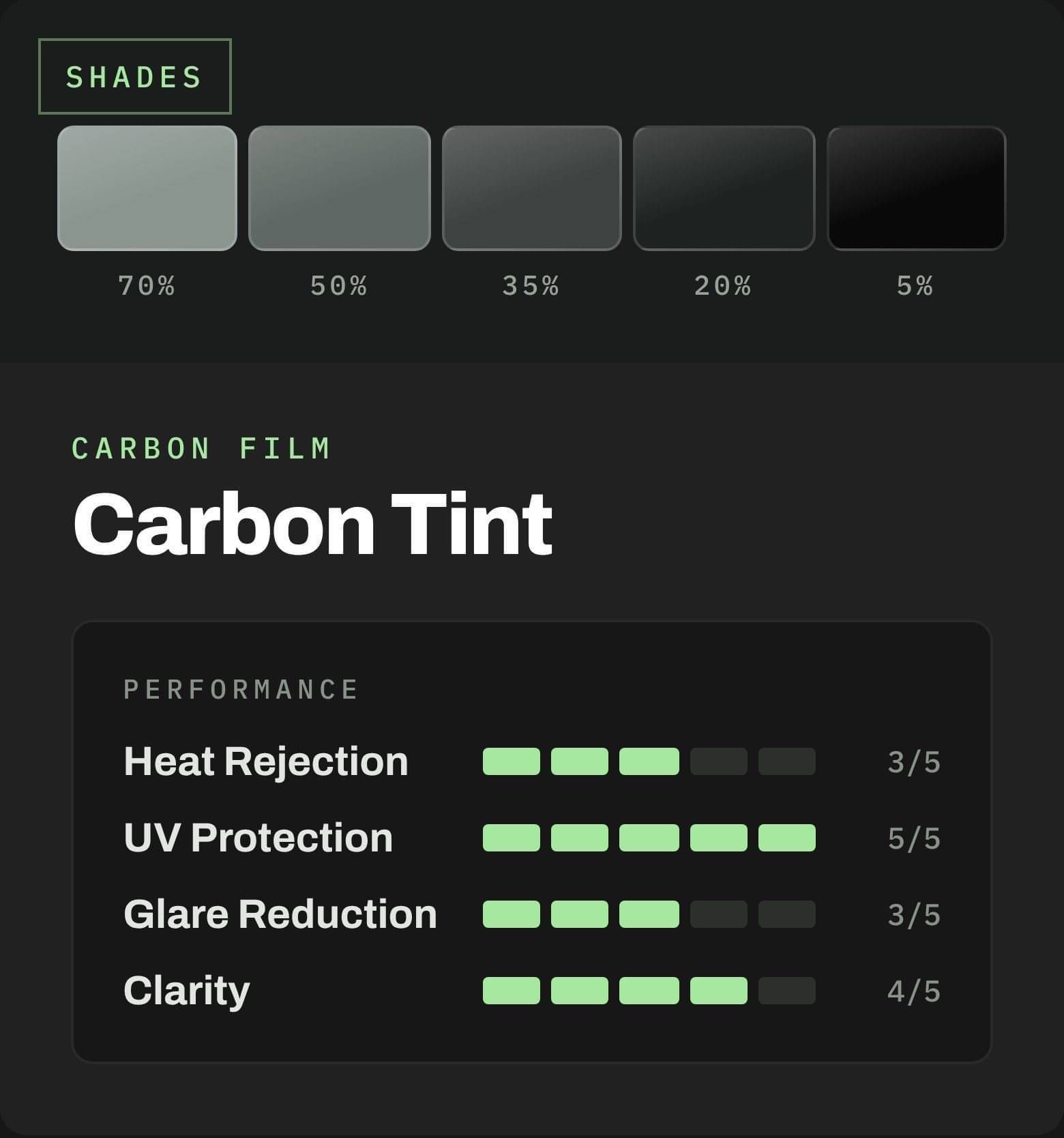
Carbon Tint
Great-value tint that looks sharp and keeps the cabin cooler.
PRICING
Matte, non-reflective finish
Good heat and glare reduction
Won't fade purple over time
RECOMMENDED
For Cost Effective, Daily Drivers
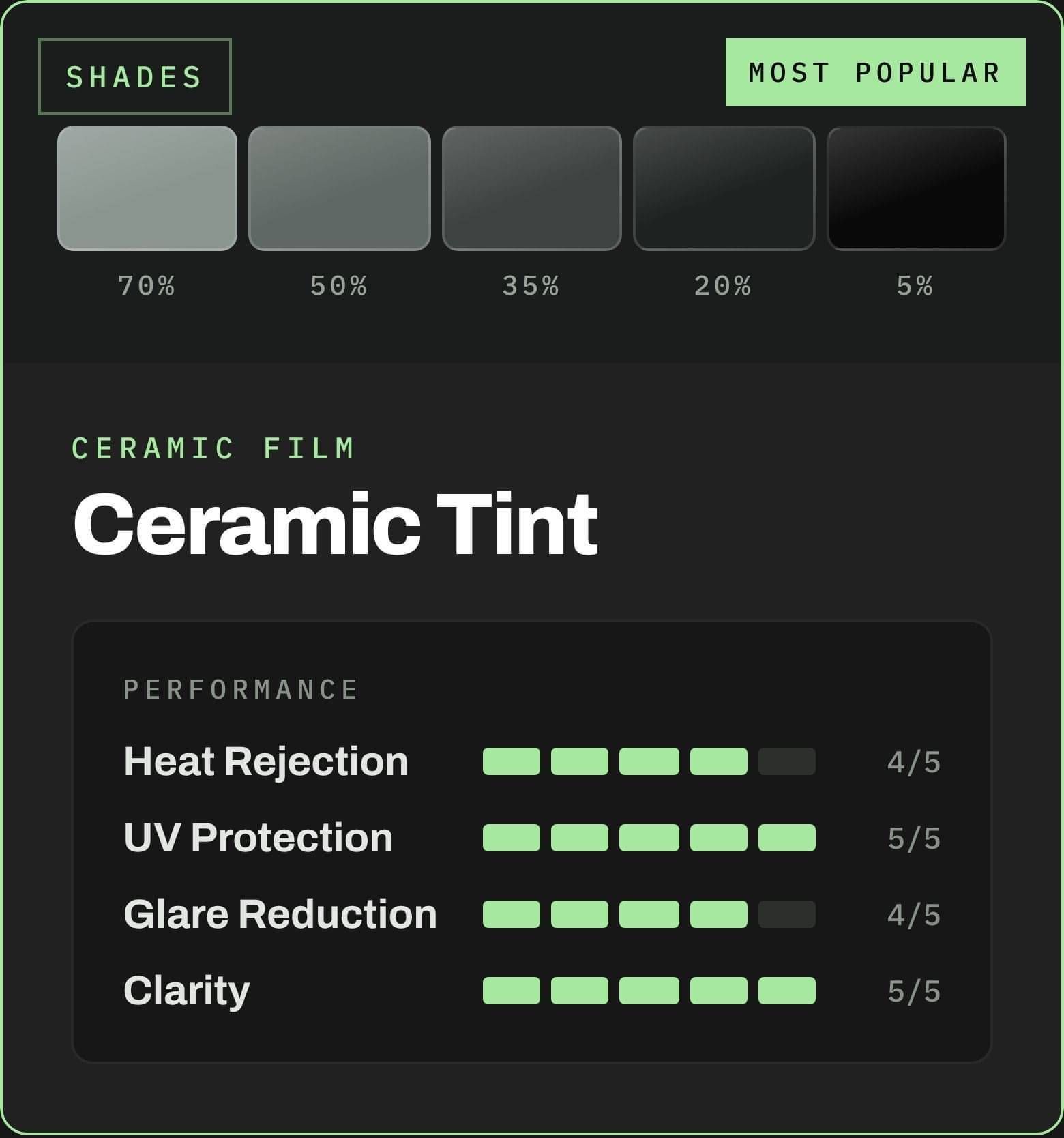
Ceramic Tint
Our most popular film: serious heat rejection with a crystal-clear view.
PRICING
High heat rejection without going darker
Excellent clarity day and night
Colour-stable for years
RECOMMENDED
For High End, Long Lasting Vehicles
IR Ceramic Tint
Our top film for owners who want the coolest possible cabin.
PRICING
Maximum infrared heat rejection
Premium clarity and colour stability
Coolest cabin, even in lighter shades
RECOMMENDED
Ultimate / Premium Tint
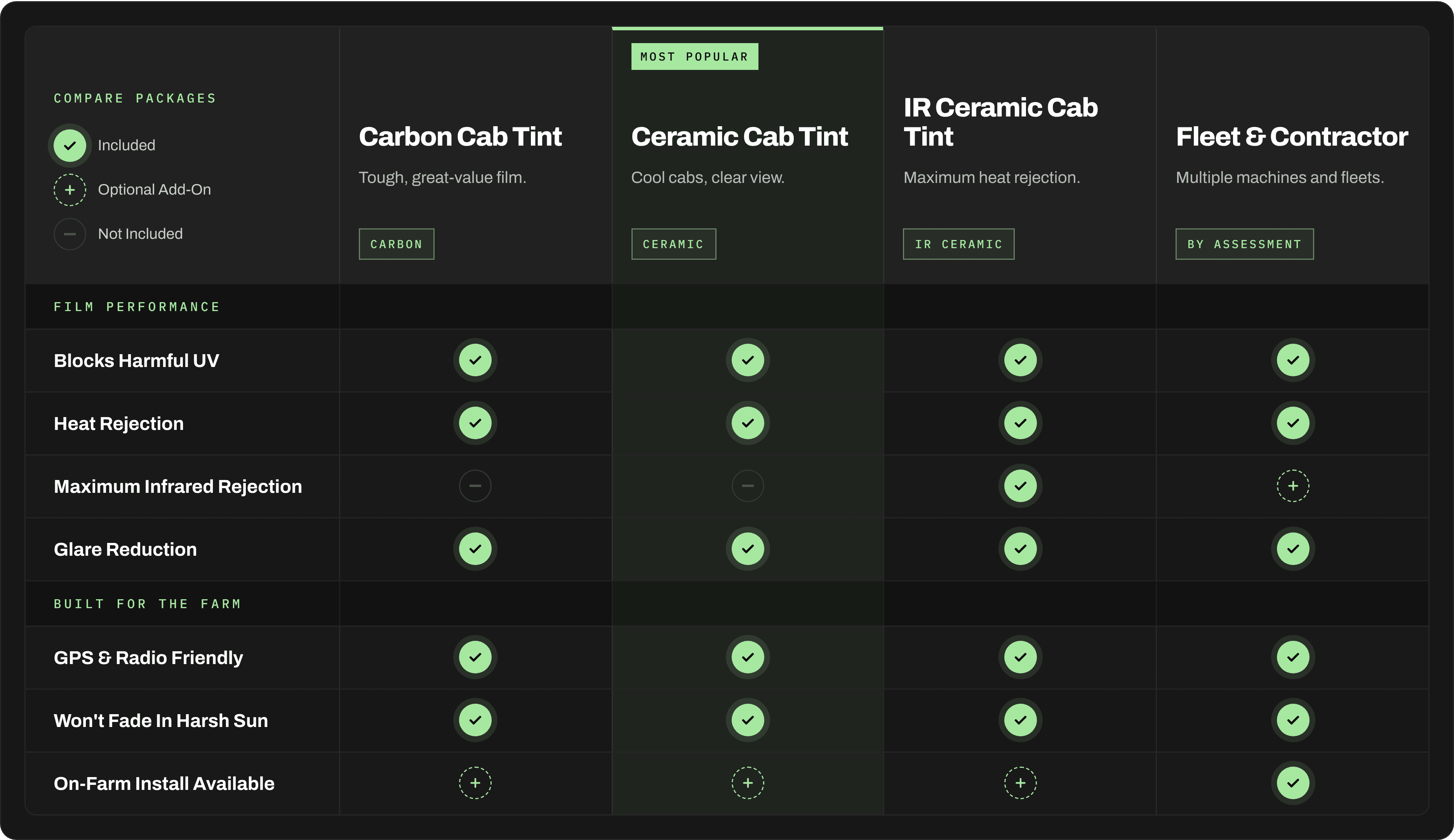
COMPARE TINT FILMS
Window Tint Visual Chart
Compare how each tint film performs and the quality you can expect from every install.
WHAT IT PROTECTS AGAINST
Cab Problems Tint Solves
The things that make long days in the cab harder than they need to be.
Greenhouse Cabs
Large glass panels that turn the cab into a hothouse by midday.
Operator Fatigue
Heat and glare that wear operators down on long shifts.
Glare Off The Paddock
Sun reflecting off water, crops and dust making implements hard to watch.
Overworked Air-Con
Cab cooling that struggles to keep up through summer.
Sun-Damaged Seats
Cab seats and dashboards cracked and faded by UV.
Sunburnt Operators
Hours of UV exposure through side and rear glass.
OUR PROCESS
How We Tint Your Cab
Careful prep and precise fitting, whether your machine comes to us or we come to the farm.
01
Assess The Cab
We look at your cab glass, sightlines and how the machine is used, then recommend the right film.
02
Prepare The Glass
Dust and grime are cleaned from every panel, and old film removed, so the new tint bonds properly.
03
Precision Fit
Film is cut to each glass panel and fitted by hand, keeping key sightlines clear.
04
Cure & Hand Over
We explain how long the film needs to cure before cab doors and windows are cleaned.
TINT ADD-ONS
Add To Your Tint
Extras that finish the look and keep your glass in top shape.
Add them to your tint booking.
ADD-ON
Old Tint Removal
Old, bubbled or scratched cab film removed cleanly before new tint goes on.
BY QUOTE
TAILORED TO YOUR BIKE
ADD-ON
Roof Glass Tint
Tint for cab roof panels, where the midday sun does the most damage.
BY QUOTE
TAILORED TO YOUR VEHICLE
RECOMMENDED
Fleet Tinting
Multiple tractors and machines tinted to the same spec for your operators.
BY QUOTE
TAILORED TO YOUR VEHICLE
ADD-ON
Glass Coating
A rain-repelling coating that helps cab glass stay clearer in wet weather.
BY QUOTE
TAILORED TO YOUR VEHICLE
Not sure what your cab needs? Mat will recommend the right extras for your machines and how they work
RECENT CABS
Real Agricultural Tint Installs
Tractors, harvesters and farm machinery tinted across the Waikato.




WHY MATS DETAILING
Agricultural Tinting You Can Trust
Farm machinery works hard, and so does the film we fit. Mat brings the same care to a tractor cab as to a luxury car.
Visibility First
Lighter films on key sightlines for safe operation.
Season-Tough Films
Carbon and ceramic films built for harsh sun and dust.
GPS-Friendly
Non-metallic films that won't interfere with guidance systems.
On-Farm Installs
Larger machines tinted on site by arrangement.
FAQS
Agricultural Tinting Questions
What Waikato farmers and contractors ask before tinting their machinery.
Can You Tint Tractor And Harvester Cabs?
Yes. We tint tractors, harvesters, telehandlers, sprayers, loaders, diggers and other cabbed machinery across Hamilton and the Waikato. Cab glass is usually heavily curved, so the film is heat-shaped to fit rather than simply laid on, which is the main difference from tinting a car.
We work on individual machines and on fleets. For contractors we can run through several machines in a scheduled block rather than one at a time.
Tell us the makes and models when you enquire. Cab glass varies enormously between manufacturers and it affects both the quote and the time.
How Much Does It Cost To Tint A Tractor Cab?
Tinting a tractor cab at Mats Detailing starts from $1000 per machine, depending on the number of windows, the glass area and how curved the panels are. Fleet pricing is available for contractors and larger operations.
A cab with a large wraparound screen and multiple curved panels is a bigger job than a car, both in glass area and in shaping. A compact loader cab is considerably less.
We will quote from photos if you send them through, or come out and look at the machine if it is easier than bringing it in.
How Much Heat Does Cab Tinting Actually Remove?
Quality ceramic film blocks up to 99% of UV and a substantial share of infrared — the part you feel as heat. In a cab sitting in full summer sun the difference is significant, and it also eases the load on the air conditioning.
That last point matters more on machinery than on a car. Ag air conditioning works hard in dust and chaff, condensers clog, and anything that reduces the heat arriving at the glass means the system is fighting less.
The practical result operators report is less fatigue late in the day, which is the part that actually affects how much work gets done.
Does The Tint Have To Be Dark To Block Heat?
No, and this is the most important thing to understand. Darkness and heat rejection are not the same thing. A quality light ceramic film can reject more heat than a much darker cheap film — and a very dark film absorbs heat and re-radiates some of it back into the cab.
For machinery we usually recommend a light to mid film. It keeps the cab visibly clear for the operator while doing the heat and UV work, which is what you are actually paying for.
If someone is selling you darkness as the measure of performance, they are selling you the wrong thing.
Will Tinting Make It Harder To See Out Of The Cab?
Not with the right film. Operators need to see implements, hitch points, row markers and ground crew, often in poor light, so we specify film that cuts glare without compromising visibility. Going too dark is the main mistake we see on machinery.
The rear glass deserves particular care. If the back window is too dark, ground crew cannot see the operator to give hand signals while hooking up — that is a genuine safety problem, not a convenience one.
We will discuss which panels get what before anything goes on. Different windows on the same cab often want different films.
Does Window Tint Protect Operators From Sun Exposure?
Quality film blocks up to 99% of UV, which is the component responsible for skin damage. For operators spending long days in a cab through a New Zealand summer, that is a meaningful reduction in exposure through the glass.
New Zealand has among the highest UV levels and melanoma rates in the world, and outdoor workers are a recognised high-risk group. For an employer with staff operators, cab film is a low-cost control worth documenting.
It is not a substitute for sunscreen and sensible practice outside the cab, and we would not claim otherwise. It addresses the hours spent behind glass.
Is It Legal To Tint A Tractor Or Farm Machine?
Machinery that travels on public roads is subject to vehicle glazing requirements, and the rules for agricultural motor vehicles are not identical to those for passenger cars. We check what applies to your specific machine before fitting anything.
What we will not do is put a machine outside the rules to make it darker. We measure with a meter and tell you what is available to you.
If your machine never leaves the farm, the considerations are different again. Tell us how it is used when you enquire.
Can You Come To The Farm?
Yes. Most machinery is tinted on site, because getting a header or a large tractor to a workshop is rarely practical. We work across Hamilton, Cambridge, Te Awamutu, Morrinsville, Matamata and the wider Waikato.
We need the machine clean, undercover or out of the wind if possible, and ideally power. Film does not go on well in dust or rain, so a shed is the better option where there is one.
For fleets we will come to you and work through the machines in sequence.
How Long Does A Machine Take?
Most cabs take half a day to a day depending on the number of windows and how curved the glass is. Curved panels have to be heat-shaped individually, which is where the time goes.
We can usually work around your schedule — early in the day, between jobs, or over a weekend if the machine cannot be spared during the week.
For fleet work we will give you a per-machine time so you can plan which units come out of service when.
When Is The Best Time To Get It Done?
Late winter or early spring, before the season. Getting cabs done in August or September means the film is on before the heat arrives and the machines are not being pulled out of work during their busiest months.
The worst time is January, when you need it most and can least afford the machine sitting still.
We book fleet work ahead for exactly this reason. Talk to us in winter and we will schedule around your calendar.
Is DIY Cling Film Any Good For Tractor Cabs?
It has its place on flat glass, but cab glass is the hardest case for it. Compound curves need heat-shaping to lay flat, and cling or self-adhesive film applied cold over a curve will bubble, wrinkle and lift at the edges, usually within a season.
Very dark cling products also run into the visibility and safety issues above — a 5% film is close to opaque, and on a rear window that means ground crew cannot see you.
If budget is the driver, a light professional film on the panels that matter most will outperform a dark DIY film across the whole cab. We are happy to quote it that way.
How Long Does Machinery Tint Last?
Quality film properly installed lasts many years, and premium films carry manufacturer warranties against bubbling, peeling, cracking and colour change. Cheap film in a high-UV, high-dust environment is where the early failures come from.
The conditions are harder than a car faces — more sun hours, more vibration, more dust working at the edges. That is why edge preparation and sealing matter as much as the film itself.
We will tell you what warranty comes with the film you choose, and what it covers in an agricultural setting specifically.
Will Tint Survive Washdowns And Dust?
Yes. Film is applied to the inside of the glass, so exterior washing, dust and spray do not touch it. Inside the cab, it handles normal cleaning with a soft cloth and a non-ammonia cleaner.
Avoid ammonia-based glass cleaners on tinted glass — they break the film down over time. Any mild detergent and a microfibre cloth is fine.
The edges are the vulnerable part in a dusty environment, which is why we take care with preparation and sealing at install rather than rushing it.
Can You Do Safety Or Shatter Film On Cabs?
Yes. Safety film holds glass together if it is broken, which is worth considering on machines working near stone, in forestry, or anywhere debris is thrown. It can be specified alongside or instead of a tinted film.
It is also worth considering on machines that sit in paddocks or yards where vandalism or stock damage is a risk.
Tell us the working environment and we will specify accordingly rather than fitting the same film to everything.
Do You Tint Farm Buildings, Dairy Sheds And Offices?
Yes. We install architectural window film for farm offices, dwellings, dairy sheds and other rural buildings. The usual reasons are an office that overheats in afternoon sun, glare on screens, or UV fading carpet and furnishings.
These are different films from automotive and machinery tint, specified for building glass and chosen for heat rejection, glare control, privacy or safety depending on the room.
If we are coming out to do machinery, it is worth having us look at the buildings in the same visit.
PROTECTION - CORRECTION - REFLECTION
Keep Your Operators Cool This Season
Get your machines tinted before silage and harvest. Tell us what you run and Mat will recommend the right film for each cab.
Send a few photos
Snap your paint in daylight, swirls and all.
Get Mat's recommendation
The right coating for your paint and budget, with a clear quite.
Book a time that suits
Choose a time that suits at our Riverlea workshop.

Hamilton’s Premium Paint Correction, Protection & Detailing Services
VEHICLES MARINE RVS MOTORBIKES
SERVICING
CONTACT US
HOURS
Mon - Fri, 9AM - 5PM
ADDRESS
2/142 Riverlea Road, Riverlea, Hamilton 3216